VR firefighter training, rental only
Feel the heat. Feel the hose kick back. Walk away without a scratch.
FLAIM Systems, made in Australia, builds the most physically real virtual reality firefighter training in the world. It is backed by Darley and supplied on a rental model only, so you always train on the current system without owning the hardware. SkillsTrain is the exclusive distributor for FLAIM across Southern Africa.
How FLAIM is supplied
Rental only, backed by Darley, supported locally
FLAIM is not sold as a box you buy and maintain alone. It is rented, backed by Darley, and supported on the ground in Southern Africa by SkillsTrain. Here is what that means for you.
Train on the latest, own none of it
FLAIM is supplied on a rental model only. You do not buy the hardware, you rent the current system, so you are never left running outdated kit. Phone Linda for rental options.
Backed by a firefighting name
FLAIM is backed by Darley, a long established name in the fire industry. That backing sits behind the system you train on.
Supplied and supported, not delivered
SkillsTrain is the exclusive Southern African distributor. We supply the systems and support your instructors. We do not deliver or accredit the training itself, your own qualified trainers do.
Figures published by FLAIM Systems.
Real gear, real feedback
Virtual reality you can feel in your hands
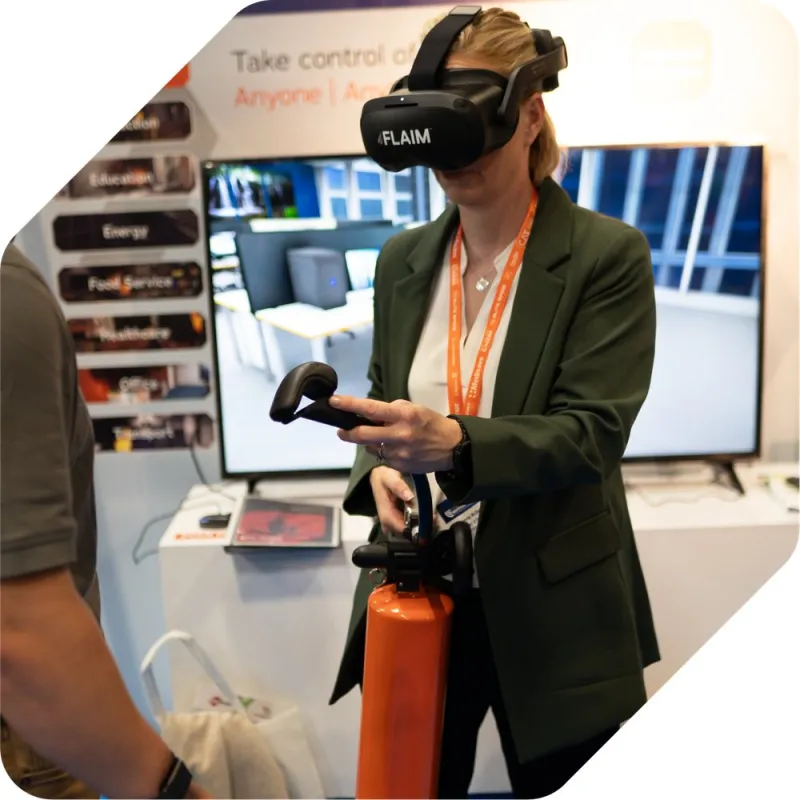
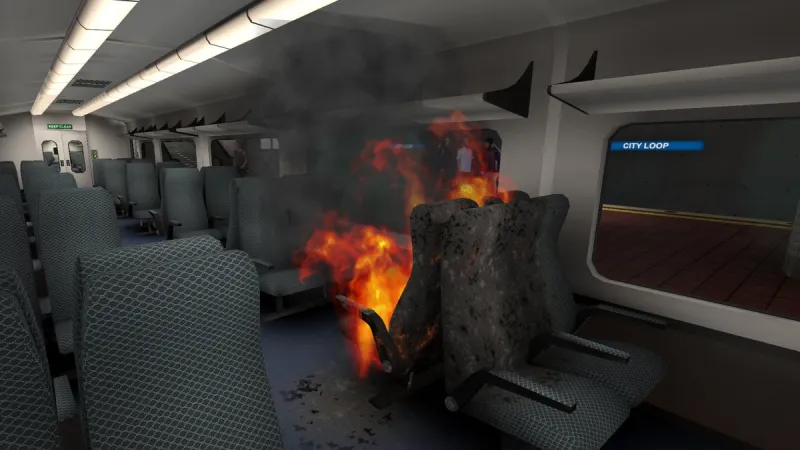
VR means the trainee puts on a headset and steps into a fire that looks, sounds and behaves like the real thing. What sets FLAIM apart is that the training is not only visual. The trainee holds a real firefighting nozzle that pushes back with genuine hose pressure, wears a heat suit that warms up depending on how close they stand to the flames, and feels the equipment respond in their hands.
It is as near to a real fire as you can get without lighting one, and it can be repeated as often as you like, in a corner of a room, until the right response becomes second nature.
Why it sticks
People remember what their body does
FLAIM makes what the industry calls XR training. XR means extended reality, which is simply virtual reality combined with real physical equipment you can pick up and use. So instead of waving an empty controller at an imaginary fire, your trainee grips an actual nozzle and braces against real back-pressure while the headset shows them the scene.
When a firefighter has felt the weight of the hose, felt the heat build as they approach a flashover, and made the call to back out under that pressure, the lesson stays with them in a way a slideshow never could. That is the whole point of physically real training.
The FLAIM family
Three systems, one immersive platform
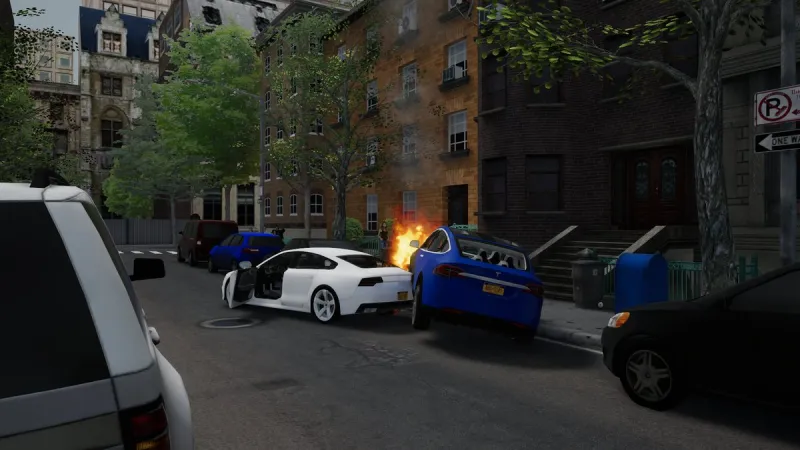
FLAIM is not one product. It is a family of three, each built for a different job, from full crew firefighting to workplace extinguisher training and command level decisions.
Train the whole crew, from nozzle to command
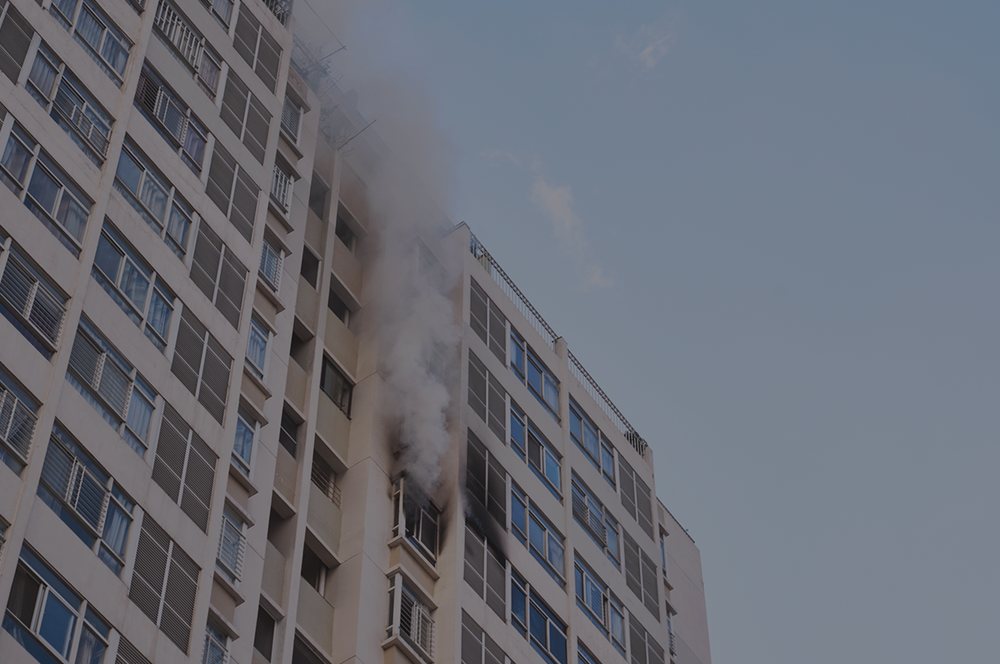
FLAIM's flagship trains firefighters at every level, from an individual holding a line to a full crew practising together. Up to five people take different roles in one scenario and can even join from different locations. It ships with more than 80 scenarios, from multi-storey structure fires to industrial, aviation, rail and shipboard incidents.
Every employee, extinguisher ready
Built for ordinary staff, not just firefighters. The trainee holds a replica extinguisher with haptic feedback and works through more than 80 scenarios, from offices to warehouses and factories, in 28 languages. No live flame, no mess, and it teaches the PASS technique, the standard four step method for using an extinguisher.
Command decisions, rehearsed under pressure
Moves beyond individual skills to the decisions that run a scene. Up to five people take different roles in the same scenario, including the incident commander, and can join from different locations to work the incident together. Coordination, communication and command, all rehearsed safely.
Two cases, ready in minutes
A firefighting training ground that travels
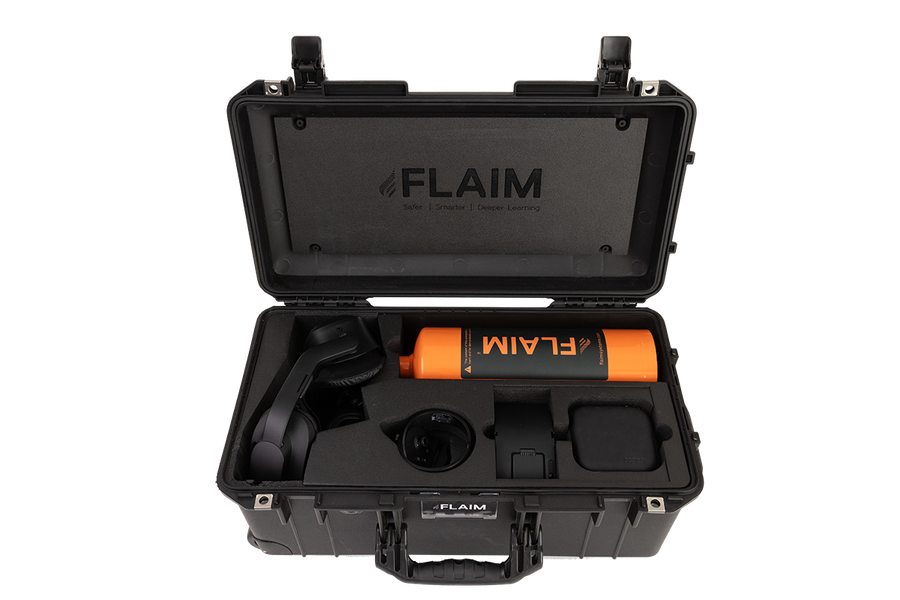
The full FLAIM system packs into two rugged cases, sets up in under ten minutes and is designed to travel by air. You can run it in a station, a boardroom or a training bay, with no dedicated facility to build and no technical specialist required to switch it on.
That portability is what lets a service drill weekly rather than once or twice a year. The training comes to your people, wherever they are based.
Who it is for in South Africa
Built for the teams who have to be ready
If your people fight fires, or are legally required to be ready to, FLAIM is built for you. A few groups in our market benefit most.
Municipal fire and rescue
Most South African fire services train for structure fires only once or twice a year. FLAIM lets a station drill weekly, in a corner of a room, without booking a burn site.
Mining and industrial safety
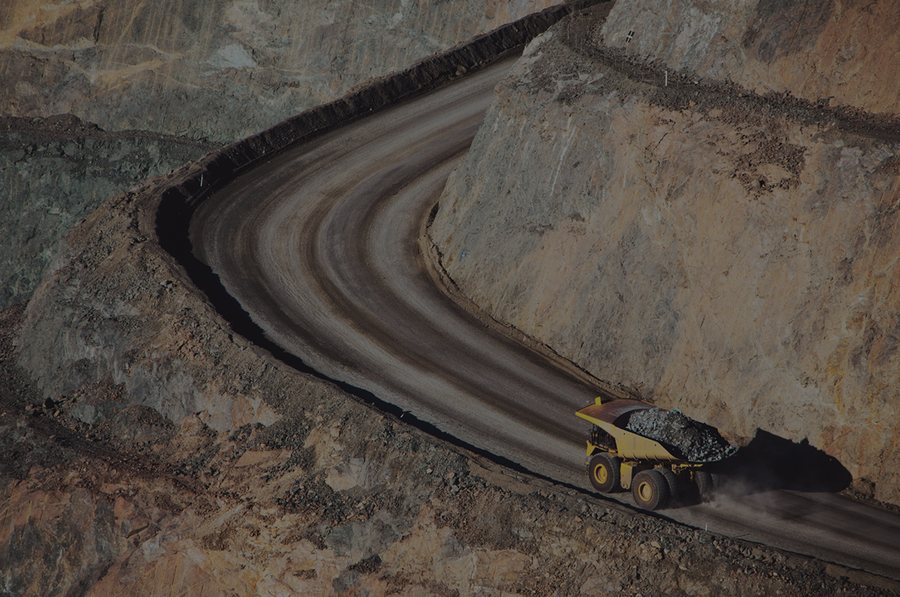
Mine fires and underground emergencies demand people who react correctly under pressure. Repeatable FLAIM practice builds that muscle memory without putting anyone near real flame.
Corporate and workplace safety
Plants, warehouses, wind farms and airports all carry fire safety obligations. FLAIM FEX lets ordinary staff practise using an extinguisher properly, without lighting a real fire on site.
Defence, academies and colleges
Defence units, fire colleges and training providers use FLAIM to drill fire response repeatedly and safely, and to give every student far more hands on repetitions than live equipment allows.
Does it actually work
The evidence behind FLAIM
The evidence is strong, but it belongs to FLAIM and the independent bodies that tested the system, not to us. We credit each source, because it is theirs.
Independently validated firefighter training method
More confident applying skills
General VR-training research (PwC), not firefighting-specificFaster to complete training
General VR-training research (PwC), not firefighting-specificFLAIM was independently evaluated by TEEX, the Texas A&M Engineering Extension Service, and validated as a credible alternative training method with zero system failures recorded during testing (TEEX evaluation, reported by FLAIM, 2023). Separately, general VR soft-skills research from PwC (2020, not firefighting-specific) found learners were 275% more confident applying their skills after VR training and completed training up to four times faster than in a classroom.
Each FLAIM system is also estimated to save around 20 million litres of water and roughly 27 tonnes of carbon a year, based on around 2,000 training hours a year, compared with live-fire training, because no water, fuel or foam is burned (FLAIM figures).
Important: VR does not replace live-fire training or your instructor. TEEX validated FLAIM as an effective training method when it is used alongside professional instruction. It is used to train more often and more safely between live exercises, not to replace them. SkillsTrain supplies and supports FLAIM in Southern Africa and does not deliver or accredit the training itself.
Put the headset on
You cannot understand FLAIM from a page
You have to feel the hose push back and the heat rise. Book a demo and, as your Southern African distributor, we will bring FLAIM to your team and walk you through a live firefighting scenario end to end. FLAIM is supplied on rental. Phone Linda for rental details.
Frequently asked questions
What is FLAIM?
FLAIM is an immersive virtual reality (VR) firefighter training system made by FLAIM Systems in Australia. Trainees wear a VR headset and use real equipment: a firefighting nozzle that reproduces genuine hose back-pressure, a heat suit that warms up near the flames, and haptic feedback in the hands. It comes in three systems: FTS (Firefighter Training System) for structure and industrial fires, FEX (Fire Extinguisher Training System) for workplace extinguisher training, and Incident Command for multi-role, command-level training.
Is FLAIM rental only?
Yes. FLAIM is supplied on a rental model only. You do not own the hardware, you rent the current system and SkillsTrain supports it locally in Southern Africa. This means you always train on an up to date system rather than ageing equipment. Phone Linda for rental options.
Who backs FLAIM, and who supplies it here?
FLAIM is backed by Darley, a long established name in the fire industry. SkillsTrain is the exclusive distributor for FLAIM across Southern Africa, which means SkillsTrain supplies the systems, gets instructors confident on the technology and provides local support. SkillsTrain does not deliver or accredit the training itself.
Does VR firefighter training actually work?
Yes. FLAIM's system was independently evaluated by TEEX, the Texas A&M Engineering Extension Service, and validated as a credible alternative training method with zero system failures during testing (TEEX evaluation, reported by FLAIM, 2023). TEEX added an important condition: it validated FLAIM as an effective training method when used alongside professional instruction, so the technology supports your trainer rather than replacing them. Separately, general VR-training research from PwC (2020, not firefighting-specific) found learners completed training up to four times faster and were 275% more confident applying their skills afterwards. VR is used to train more often and more safely between live exercises, not to replace live-fire training.
What are the three FLAIM systems?
FTS (Firefighter Training System) trains firefighters from individual skills up to full team incident command, with more than 80 scenarios and up to five people in one simulation. FEX (Fire Extinguisher Training System) teaches ordinary staff safe extinguisher use across more than 80 scenarios in 28 languages, using a replica extinguisher. Incident Command trains up to five people in different roles, including the incident commander, to practise command-level decisions together in the same scenario (FLAIM product information).
What hardware do you actually feel?
More than most VR. The trainee wears a VR headset, grips a real nozzle that kicks back with true hose pressure, wears a heat suit that warms up depending on how close they are to the fire, and feels haptic force feedback through the equipment. The full system packs into two rugged cases and sets up in under ten minutes (FLAIM figures).
Is FLAIM better for the environment than live-fire training?
FLAIM estimates each of its systems saves around 20 million litres of water and roughly 27 tonnes of carbon a year, based on around 2,000 training hours a year, compared with live-fire training, because no water, fuel or foam is burned (FLAIM figures). It also removes repeated trainee exposure to smoke and firefighting foam chemicals.
SkillsTrain is the exclusive Southern African distributor for FLAIM. We supply and support the systems; the training is delivered by the qualified organisations that use them.
Not sure which platform fits your team? See our vendor-neutral VR and simulation buyer's guide.