VR training in South Africa
Train for the worst day of the job, every week, with nobody getting hurt.
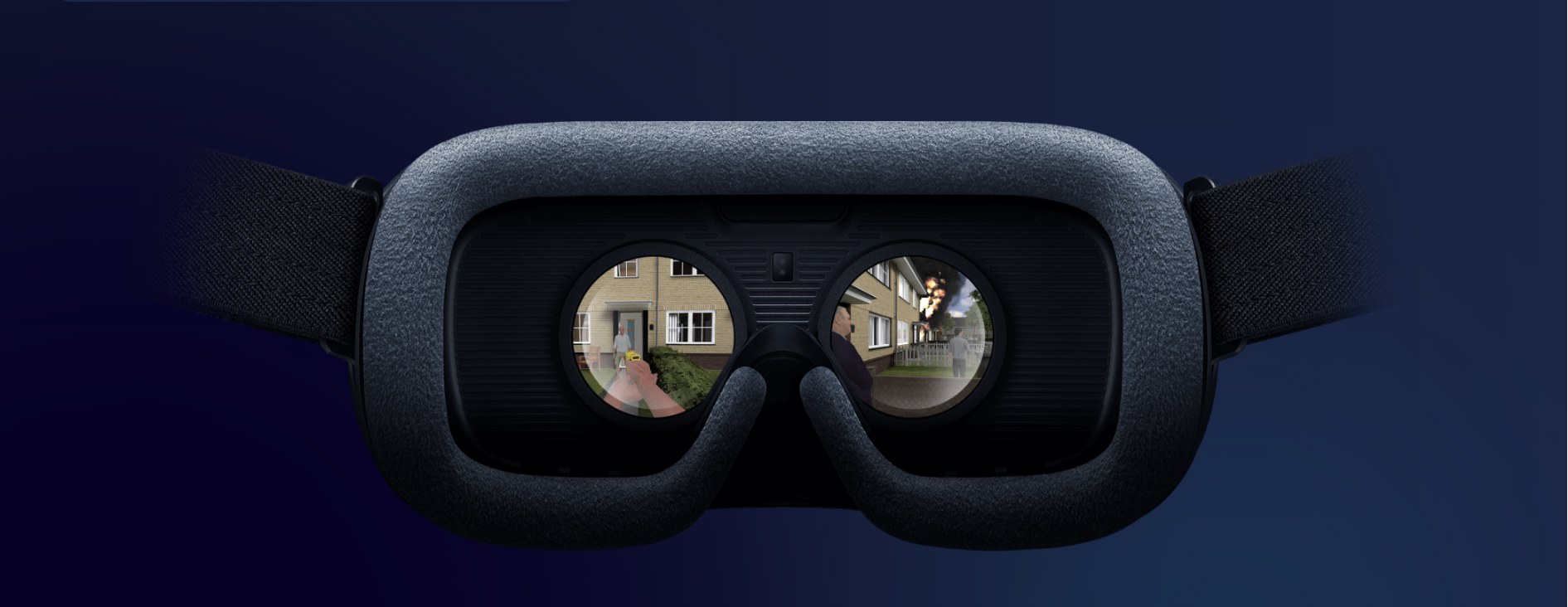
VR (virtual reality) means putting on a headset and stepping into a realistic emergency that looks, sounds and reacts like the real thing, with nobody in danger. SkillsTrain brings a complete VR training ecosystem to Southern Africa, covering fire, rescue, police and medical, through four world class platforms.
Why emergency services are moving to VR
Practise weekly, not once a year
Most emergency teams in South Africa still train for the hardest moments once or twice a year, because live burns and full simulations are expensive, dangerous and hard to schedule. VR changes the maths. The equipment fits in a couple of carry cases, sets up in minutes, and lets your people repeat the same scenario until the right response becomes muscle memory.
SkillsTrain does not just sell you a headset. We help you build a training programme around it, with your own instructors leading it, on the platform that fits your discipline.
Four platforms, one ecosystem
The VR training systems we bring to Africa
Each platform is a specialist in its own discipline. Together they cover almost every emergency your people will face. SkillsTrain supplies and supports all four across Southern Africa.
Firefighting, made in Australia
FLAIM: feel the heat and the hose
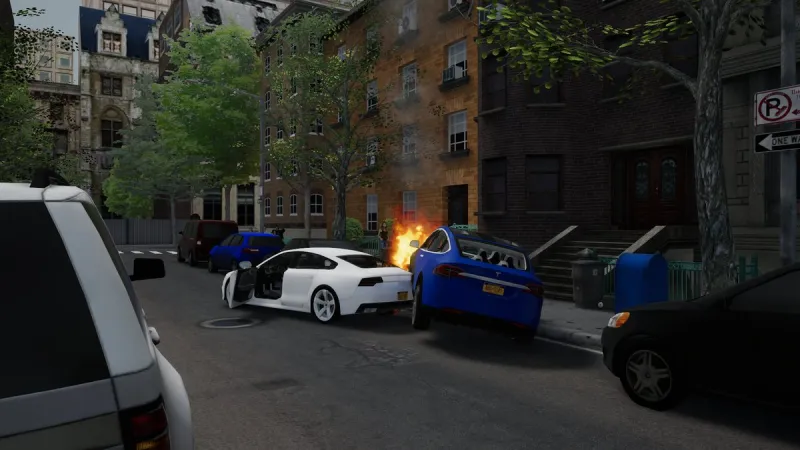
FLAIM Systems builds fully immersive firefighting and fire safety training, installed in more than 700 systems across 45 countries (FLAIM figures). It pairs a VR headset with real kit: a live hose that pushes back like the real thing and a heat vest that lets trainees feel where the fire is. This is the platform for structure fires, industrial fires and fire extinguisher training.
Explore FLAIM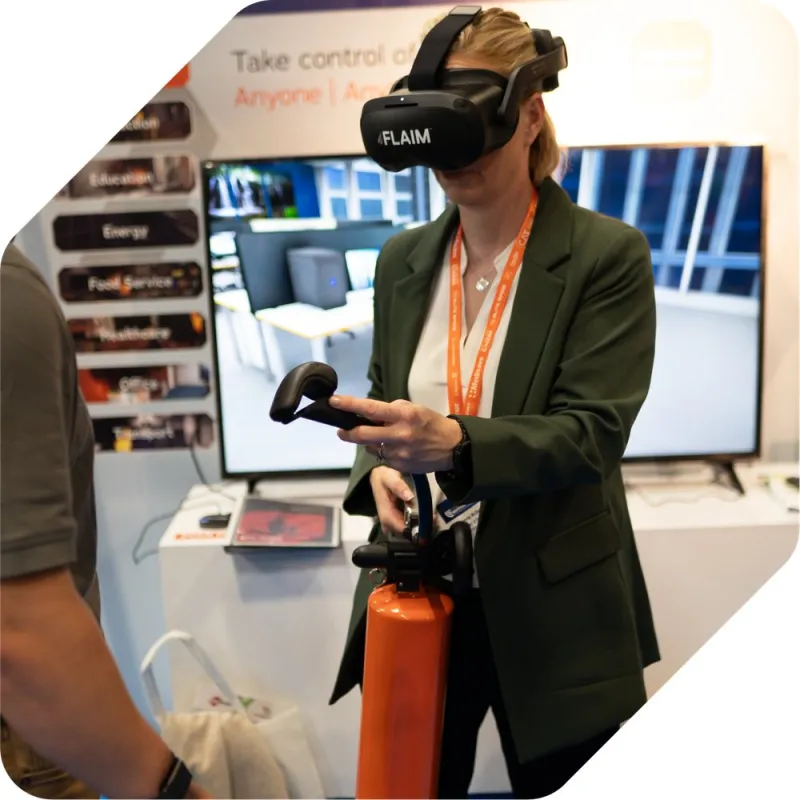
The rest of the ecosystem
FlashGroup XR, VR Patients and EON Reality
Where FLAIM owns fire, these three cover multi team crisis response, clinical care and build your own immersive learning.
FlashGroup XR
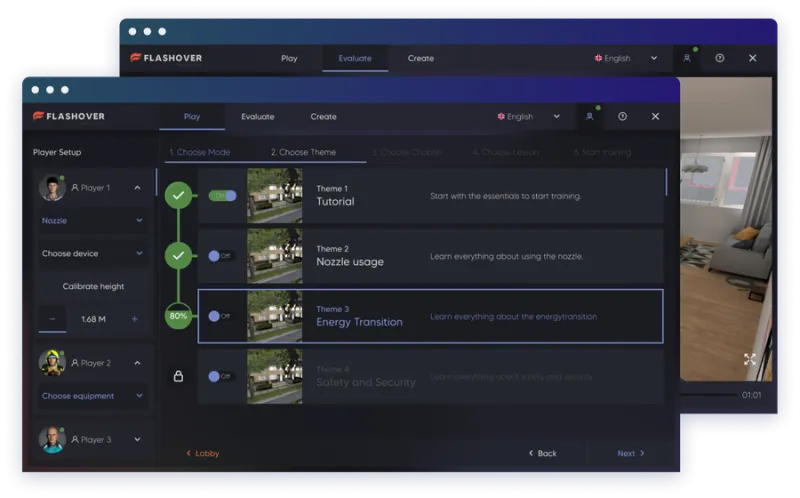
From the Netherlands, FlashGroup XR runs multidisciplinary emergency scenarios where fire, medical and crisis teams train together in one simulation. Its three lines cover firefighting, law enforcement and medical response, and the whole multiplayer kit packs into a single suitcase.
VR Patients
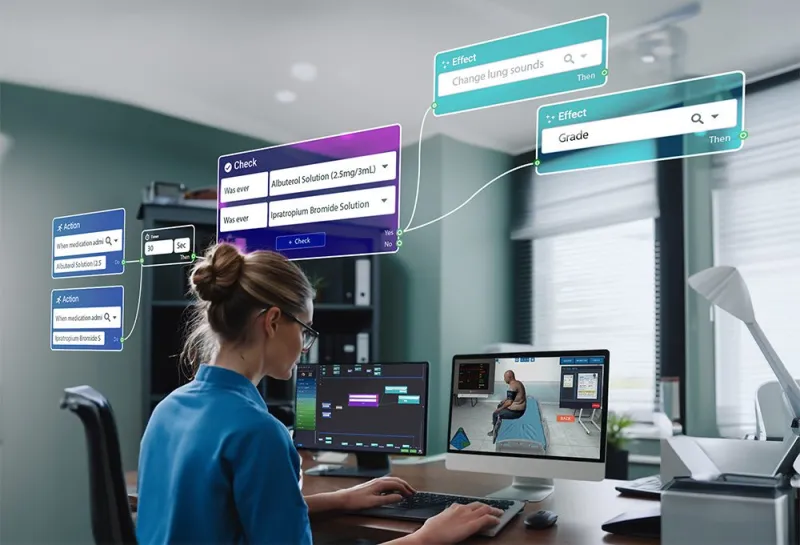
Based in Columbus, Ohio, VR Patients is a medical simulation platform for EMS (Emergency Medical Services), nursing and clinical training. It ships with 85 ready built patient cases, with more on the way (VR Patients figures), and lets instructors build their own case in about half an hour with no coding. It even runs in an ordinary web browser.
EON Reality
EON is the general purpose engine of the ecosystem. Where the others are specialists, EON covers the rest of what a workforce needs to know, from oil and gas, plant and mining to compliance and soft skills. Your own trainers author AR and VR lessons from your manuals, on phones, tablets, web and headsets (EON figures).
One programme, one supplier
You do not have to choose in the dark. SkillsTrain helps you match the platform to your discipline, your kit and your budget, and supports the whole programme from one place. Book a demo and we will walk you through the platform that fits.
The proof behind the platforms
The evidence is theirs, not ours
These figures come from our technology partners and the independent bodies that tested them. We credit each source, because the evidence is theirs.
Faster to train
More confident afterwards
FLAIM systems, 45 countries
VR learners reached competence up to four times faster than in a classroom and were 275% more confident applying their skills afterwards (PwC research, cited by FLAIM Systems). First responders trained with immersive VR made 46% fewer mistakes and worked 29% faster (figures published by FlashGroup XR from their cited research). FLAIM technology is deployed in more than 700 systems across 45 countries, and each system saves around 20 million litres of water and roughly 27 tonnes of carbon a year versus live fire training (FLAIM figures), because no water, fuel or foam is burned.
Sources: PwC research and FLAIM Systems; FlashGroup XR; TEEX evaluation of FLAIM (2023). SkillsTrain supplies these VR systems in Southern Africa and does not deliver or accredit the training itself.
Who it is for
Who is VR training for in South Africa?
Municipal fire and rescue services
South Africa has 257 municipalities, with active fire services in more than 50 of them and several hundred fire stations nationally. Most run on tight budgets. VR lets a station drill weekly without booking a burn site.
Mining companies
South Africa has more than 560 active mines, and mine safety is unforgiving. Every operation needs fire, rescue and emergency response training that people actually retain, which is what repeatable VR practice delivers.
Corporate safety teams
Manufacturing plants, petrochemical sites, warehouses and airports all carry fire and evacuation obligations. Fire extinguisher and evacuation training in VR lets staff practise a real response without a real fire.
Military and defence units
Defence organisations use VR for firefighting, medical readiness and other specialist tasks where live practice is genuinely hazardous.
Fire academies and clinical schools
Fire colleges, EMS academies, nursing schools and medical schools use VR to give every student hands on repetitions that live equipment could never stretch to.
Airports and aviation
Aviation ground teams rehearse aircraft and fuel fire response, and evacuation, in a controlled simulation before they ever face the real event.
See it for yourself
Put the headset on
The fastest way to understand VR training is to try it. Book a demo and we will walk you and your team through a live scenario on the platform that fits your discipline, whether that is fire, rescue, police or medical. No obligation, just a proper look at what your training could become.
Frequently asked questions
Who provides VR training in South Africa?
SkillsTrain supplies VR training systems across South Africa and Southern Africa. It is the only local company offering a complete VR training ecosystem, covering firefighting, rescue, police and medical simulation through four platforms: FLAIM, FlashGroup XR, EON Reality and VR Patients. SkillsTrain is the Master Distributor for FLAIM in Southern Africa. SkillsTrain supplies and supports these systems; the training is delivered by the organisations that use them.
Does VR firefighter training actually work?
In research by consulting firm PwC, cited by our partner FLAIM Systems, VR learners trained up to four times faster than in a classroom and were 275% more confident applying their skills afterwards. FLAIM was also independently evaluated by TEEX, the Texas A and M Engineering Extension Service, and validated as a credible alternative training method with zero system failures during testing (FLAIM, 2023). VR is used to train more often and more safely between live exercises, not to replace live training entirely.
What is the difference between VR and XR training?
VR (virtual reality) fully immerses the trainee in a computer generated environment through a headset. XR (extended reality) is a broader term that blends that virtual world with real physical objects, such as a hose or a medical device the trainee actually holds. FlashGroup XR and FLAIM both use this blended approach so the training feels physical, not just visual.
Can VR training run on any headset?
It depends on the platform. FLAIM and FlashGroup XR are complete systems that come with their own headset and physical equipment, so you use the hardware they supply. VR Patients runs on standard headsets like the Meta Quest 3 and HTC VIVE XR Elite, and also in an ordinary web browser with no headset at all. A demo is the best way to match a platform to your kit and budget.
Is VR training cheaper than live fire or live casualty training?
Over time, usually yes. There is an upfront cost for the system, but each session needs no fuel, water, foam, burn site or casualty actors, and the same scenario can be repeated endlessly. FLAIM estimates each of its systems saves around 20 million litres of water a year versus live fire training. The bigger saving is practice frequency: teams can drill weekly instead of once a year.
Will VR training replace our instructors?
No, and it is not designed to. The independent TEEX evaluation of FLAIM (2023) validated it as a training tool provided its use is facilitated by a professional instructor, which puts your trainer at the centre of the session. VR gives instructors more repetitions to run, safer practice and instant data to coach from. It is a force multiplier for the people who train your team, not a substitute for them.