003 - Operator Response Guidelines
Operator Response Guidelines is title three of four in Action Training Systems' Emergency Vehicle Operations series, and SkillsTrain, the authorised ATS distributor, supplies it locally as part of that series. It takes the handling skills of the earlier titles and applies them to the decisions a driver makes while actually responding to a call.
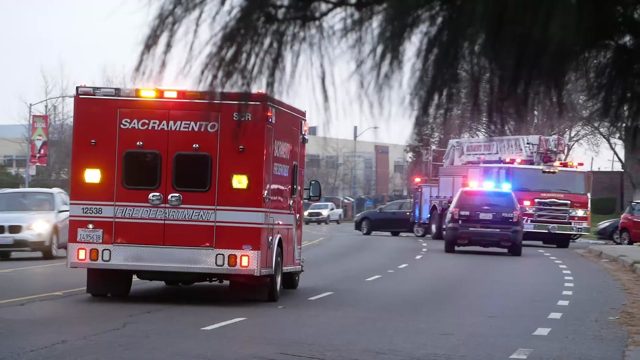
The title covers defensive driving, evasive manoeuvres, and the factors that lengthen stopping distance on a real response. A substantial part of it is devoted to intersections, which are where many apparatus collisions happen: navigating both controlled and uncontrolled intersections and understanding traffic preemption systems. It sets out best practice for the drive itself, including keeping to sensible speed limits, maintaining a safety cushion around the vehicle, turning and passing safely, and the particular risks of using privately owned vehicles to respond. Positioning the apparatus at the incident and staying safe while working on or near a roadway are also demonstrated.
It is built to current NFPA driver and operator guidance, drawing on NFPA 1010, NFPA 1500 and NFPA 1550, and uses the ATS teach, test and track model that assesses as it goes and replays anything answered incorrectly. The programme runs about 20 minutes and is supplied on USB or as a classroom streaming option, individually or as part of the complete four-title series.
Alongside it, the four-title series runs through Operator Responsibilities, Driving Skills and Techniques, and Vehicle Inspection and Maintenance, so response decision making sits inside a complete operator pathway.
Who it is for: apparatus drivers learning safe response decision making, and training officers building a structured driver and operator programme.
Frequently Asked Questions
What is the focus of this title?
Defensive driving and evasive manoeuvres, intersection safety including traffic preemption, en-route best practice such as speed, safety cushions and passing, the risks of privately owned vehicle response, and safe incident positioning and roadway safety.
Why does it spend so long on intersections?
Intersections are where a large share of apparatus collisions occur, so the title treats controlled and uncontrolled crossings and preemption systems in detail.
How is it supplied?
On USB or as a classroom streaming option, on its own or as part of the complete four-title series, running about 20 minutes.