
02 - Search & Rescue Operations
Search and Rescue Operations is the second title in Action Training Systems' The Basics of Rapid Intervention series, and SkillsTrain, the authorised Action Training Systems (ATS) distributor in South Africa, supplies it locally. It follows the introductory title and covers how a rapid intervention crew (RIC), the team held in reserve to rescue a firefighter in trouble, actually locates and reaches a downed colleague inside a structure.
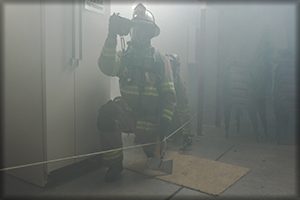
The title describes MAYDAY activation, the radio call that commits the crew, and the search and rescue procedures a rapid intervention crew follows once it is deployed. It presents firefighter self-rescue skills such as wall breaching and the long lug out escape method, and it explains air management for the crew, since the rescuers must not run themselves out of breathing air during the search. It demonstrates the use of search tools including thermal imaging cameras, searching with webbing, the rope assisted search procedure, and tethering techniques that use a hoseline as a guide. It also shows ways to deliver air to a downed firefighter, including the Universal Air Connection and the Emergency Breathing Safety System.
It uses the same teach, test and track model as the rest of the ATS range: a learner is assessed as they move through the title, and any section answered incorrectly is replayed before they are allowed to continue. It is supplied on USB or as a classroom streaming option, individually or as part of the complete three-title series.
The series runs from Rapid Intervention: An Introduction through this title to the closing Rescue Skills, and SkillsTrain supplies all three so a department can train the full rapid intervention sequence in order.
Who it is for: firefighters and rapid intervention crews building the search and location skills that come before a hands-on rescue, and training officers running a structured rapid intervention programme.
Frequently Asked Questions
What does this title actually cover?
MAYDAY activation, rapid intervention crew search and rescue procedures, self-rescue techniques such as wall breaching and the long lug out, crew air management, search tools including thermal imaging, webbing and rope assisted searches, and air delivery to a downed firefighter.
Where does it sit in the series?
Second of three, between Rapid Intervention: An Introduction and Rescue Skills.
How is it supplied?
On USB or as a classroom streaming option, individually or as part of the complete three-title The Basics of Rapid Intervention series.