
02 - Containing Leaks in Pressurized Cylinders
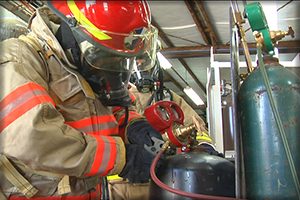
Containing Leaks in Pressurized Cylinders is title two of four in Action Training Systems' HAZMAT Containment series, and SkillsTrain, the authorised ATS distributor, supplies it locally as part of that series. It builds on the drum work of the opening title and takes on the higher-risk problem of a leak in a cylinder under pressure.
The title presents the hazards, the safety considerations and the structural features of pressurised cylinders, so a responder understands what they are dealing with before acting. It describes the kinds of leaks to expect and how to detect them, then demonstrates the techniques used to control a leak. It gives particular attention to four common and dangerous gases, oxygen, acetylene, ammonia and chlorine, each of which behaves differently and carries its own special considerations when a cylinder begins to leak.
It sits within ATS's HAZMAT range, aligned to NFPA 470 and positioned for OSHA HAZWOPER content, and uses the teach, test and track model that assesses the learner and replays any section answered incorrectly. The programme runs about 22 minutes and is supplied on USB or as a classroom streaming option, individually or as part of the complete four-title series.
The four-title series also covers Plugging and Patching Drums, Diking, Diverting and Retaining Spills, and Incidents Involving Fuel Tank Trucks, so a responder can match the containment method to the scale of the release, from a single drum to a pressurised cylinder or a fuel tank truck.
Who it is for: responders training in defensive HAZMAT containment, and training officers delivering a structured containment programme.
Frequently Asked Questions
What does this title cover?
The hazards, safety considerations and structure of pressurised cylinders, the kinds of leaks to expect, leak detection, and leak-control techniques, with special attention to oxygen, acetylene, ammonia and chlorine.
Why single out those four gases?
Oxygen, acetylene, ammonia and chlorine are common and dangerous, and each behaves differently in a leak, so the title treats their special considerations individually.
Where does it sit in the series?
Second of four in the HAZMAT Containment series, after Plugging and Patching Drums.